

What it is
Accessibility can feel complex until it is connected to everyday life.
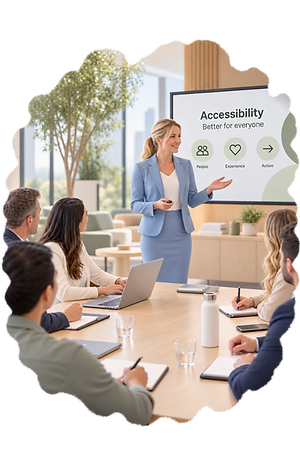
This workshop uses discussion, practical examples and lived experience to show how barriers are created and how small changes can make a difference.
The aim is awareness, not technical expertise.

Why it matters

Many accessibility barriers are created without anyone intending to exclude people. Greater awareness helps people notice those barriers earlier and make better everyday choices.
Recognise barriers: Help people notice everyday situations that can make work harder or exclude someone.
Build confidence: Give people a clearer understanding of accessibility and how to talk about it.
Make better choices: Encourage practical, inclusive decisions in everyday work.
Share responsibility: Show that accessibility is relevant to everyone, not just specialist teams.
What you'll achieve
People leave with a broader understanding of accessibility, greater confidence talking about it and practical ideas they can use at work.


Improved accessibility awareness
A stronger practical understanding of accessibility, disability and inclusion in everyday work.
More inclusive behaviours
Greater consideration of accessibility in communication, technology, services and workplace interactions.
Greater confidence
People feel more comfortable recognising barriers, discussing accessibility and making inclusive choices.
Stronger shared responsibility
A clearer understanding that accessibility is relevant across roles and teams, not only to specialists.
Fewer everyday barriers
Better awareness of how routine decisions can unintentionally make experiences harder for others.
Better everyday decisions
Participants leave better equipped to consider different needs and circumstances in the choices they make.

What's included
A facilitated session using lived experience, practical examples and discussion to make accessibility easy to understand and relevant to your workplace.

Engagement initiation meeting
Confirm the engagement scope, priorities, participants and intended outcomes before the work begins.
Lived-experience perspectives
Connect accessibility concepts to everyday situations through real examples and lived-experience insights.
Tailored workshop content
Adapt examples and emphasis to your organisation, audience and most relevant accessibility contexts.
Practical workplace examples
Explore relatable accessibility scenarios across communication, technology, workplaces and customer experiences.
Facilitated awareness workshop
Build practical understanding of accessibility, disability and inclusion through an interactive facilitated session.
Participant Q&A
Give participants dedicated time to ask questions and explore accessibility in their work.
Who it's for
For people at any level of an organisation. No previous accessibility knowledge is needed.


Senior leaders
For leaders who want a practical shared understanding of accessibility and their role in creating inclusive experiences.
Customer-facing teams
For people delivering services and interactions directly to customers, visitors or communities.
People and culture teams
For HR and people teams supporting inclusive workplaces, policies and employee experiences.
Operations teams
For people responsible for processes, systems and ways of working where everyday barriers can occur.
People leaders
For managers who influence everyday team practices, communication and workplace experiences.
Digital and communications teams
For people creating digital experiences, information and communications that need to work for more people.
What our clients say
The best measure of our work is the difference it makes for the people and organisations we support. Here’s what clients say about working with BlindSpot Solutions.